



The U.S. is on the brink of a significant demographic shift, with experts warning that the immigration policies under President Donald Trump may result in hundreds of thousands of people leaving the country this year. A recent study by the American Enterprise Institute (AEI), a conservative think tank, predicts that net migration may decline to between a negative 525,000 and 115,000 individuals by the end of this year. This stark contrast to nearly 1.3 million in 2024 paints a picture of a rapidly changing landscape for immigration in America.
If the AEI’s lowest estimate holds true, it would signal the first instance of negative net migration in decades—a startling reality for a nation built on the foundation of immigration. The research indicates a distinct shift: fewer people arriving in the U.S. and an increase in those departing, a trend largely influenced by the current administration’s aggressive immigration agenda.
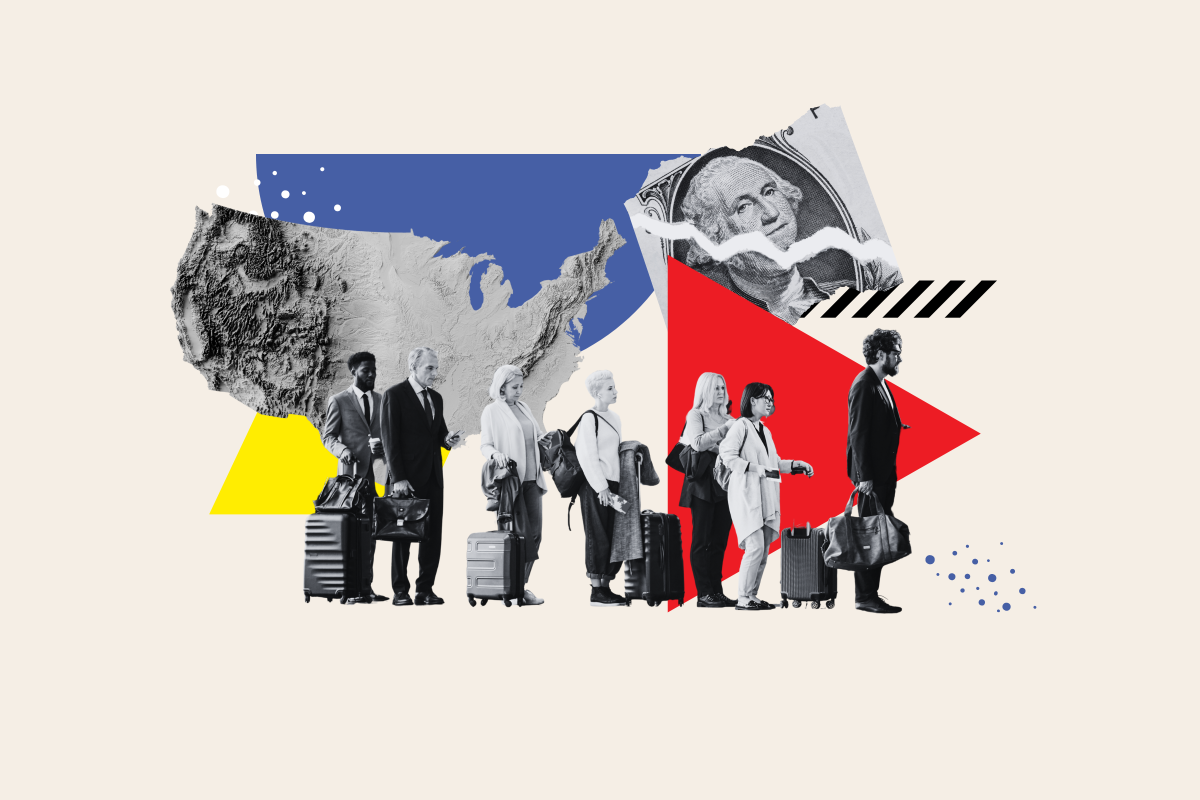
Newsweek Illustration/Canva/Getty
The potential fallout from this decline is multifaceted, particularly concerning the American workforce. As noted by the Department of Labor, a significant 19.2% of the U.S. labor force is comprised of foreign-born workers. A decline in this population not only threatens to limit the available workforce but could also have adverse effects on consumer spending. Some analysts predict a reduction in GDP by as much as 0.4%, correlating with fewer people contributing to both the economy and society.
This sentiment is echoed in a recent report from the Federal Reserve Bank of Dallas, which projected that a sustained decline in immigration could result in a 0.75% to 1.0% reduction in GDP growth this year. Madeline Zavodny, an author of the Dallas Fed paper, explained that the dip in migrant inflows will adversely affect growth in nearly all economic sectors, crippling industries dependent on a robust labor force.
Adding another layer of complexity, America faces a demographic challenge with its ongoing low birth rate. This situation already raises concerns about a shrinking working-age population, emphasizing the critical role of immigration in sustaining economic vitality. “The U.S. population is aging,” Zavodny pointed out, “and we rely on new immigrants to help fuel growth in the labor force and key sectors, from agriculture to construction to health care.”
The White House has rebutted concerns about the economic implications of the immigration agenda, asserting that Trump’s focus on deporting “criminal illegal aliens” is meant to enhance American citizens’ quality of life. Abigail Jackson, a White House spokesperson, insisted that resources associated with non-citizens were being mismanaged and emphasized, “President Trump is ushering in America’s golden age and growing our economy with American workers.”

Frederic J. Brown/AFP via Getty Images
The impact of immigration policy on specific sectors is a cause for concern among economists. Giovanni Peri, a labor economist at the University of California, Davis, highlighted that areas with lower-skilled jobs, such as construction, agriculture, hospitality, and personal services, will suffer the most. These industries typically rely heavily on immigrant labor, and the absence of this workforce could lead to price increases and reduced productivity.
Stan Veuger of AEI echoed Peri’s sentiments, asserting that the agriculture, leisure, and construction sectors are particularly vulnerable to labor shortages stemming from reduced migration. As real estate and utility sectors also tighten due to a diminished workforce, he pointed out that larger firms may manage to attract workers by offering better wages, leaving smaller companies at a greater risk.
These smaller enterprises often don’t have the means to engage with temporary worker programs, thereby amplifying their disadvantage as the demand for labor remains steady. Zavodny added that while larger businesses could adapt moderately, everyone—regardless of their size—stands to lose their customer base in the end.
Beyond employment, the financial ramifications are extensive. The American Immigration Council estimates that foreign-born individuals possess approximately $1.7 trillion in spending power, including $299 billion attributed to undocumented immigrants. This economic contribution extends to rent payments, totaling $167 billion in 2023. A decline in this spending directly translates into lower business revenues, potentially leading to layoffs and compounding the already challenging labor market conditions.
Despite warnings and the potential for economic fallout, the Trump administration remains steadfast in pursuing its immigration agenda. With deportations continuing robustly and significant funds allocated to enforce these policies through recent legislative actions, the focus appears concentrated on fulfilling campaign promises rather than considering broader economic repercussions.
When asked if the impacts on economic growth might shift the administration’s approach, Stan Veuger offered a pragmatic yet pessimistic view. “The people driving immigration policy in the White House do not care about the economic or humanitarian impact of their immigration policies,” he noted, showcasing a dissonance between economic theories and political realities.