



Curfew Imposed in Downtown Los Angeles Amid Protests and Violence
Introduction to the Current Situation
In a significant response to escalating tensions in Los Angeles, an overnight curfew has been imposed in downtown L.A., effective from 8 p.m. to 6 a.m. This measure comes in light of rampant looting and vandalism linked to protests against Immigration and Customs Enforcement (ICE) actions. The designated curfew area stretches from the 5 Freeway to the 110 Freeway, and from the 10 Freeway down to the juncture of the 110 and 5 Freeways.
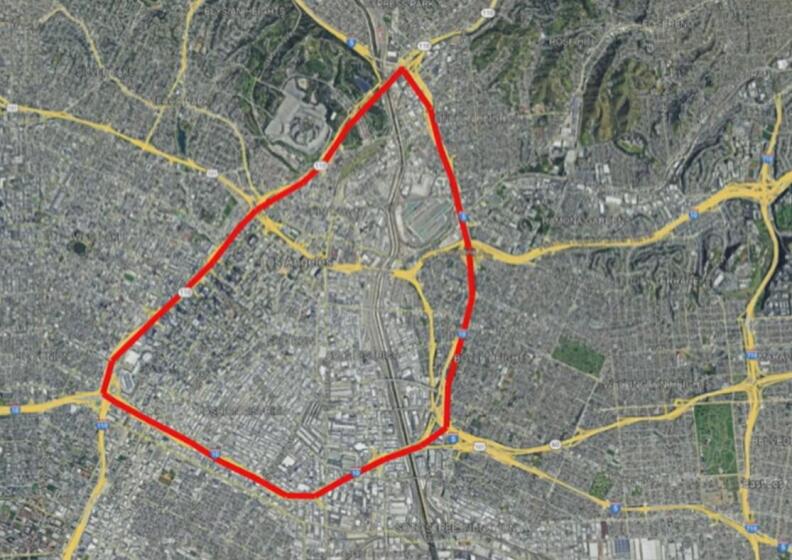
The area under curfew from 8 p.m. Tuesday to 6 a.m. Wednesday. Courtesy: KCAL News via City of L.A.
Mayor’s Response to the Unrest
L.A. Mayor Karen Bass stated that the curfew was necessary after witnessing 23 businesses looted and significant vandalism across the downtown area. "The graffiti is everywhere and has caused significant damages to businesses and a number of properties," she remarked, emphasizing the curfew as a preventative measure to protect the community. The mayor noted that the curfew area is a small fraction—just one square mile—of the expansive city that spans over 500 square miles.
Los Angeles Police Department (LAPD) Chief Jim McDonnell cautioned that any non-residents found in the curfew zone during restricted hours could face arrest, underscoring the seriousness of the situation.
State Leaders Take Action Against Federal Involvement
California state leaders have intervened at the federal level, asking a federal court to prohibit the Trump administration from employing military forces to police Los Angeles following the protests over immigration raids. Governor Gavin Newsom and Attorney General Rob Bonta filed for a temporary restraining order on this matter. This legal action comes as Bonta claimed the federal government is unlawfully invoking military force, criticizing the administration for inflaming tensions within the community.
Protests Yielding Violence and Arrests
The protests began to gain momentum over the weekend after ICE conducted immigration raids across Los Angeles, which included confrontations with demonstrators. By Tuesday, numerous protests had erupted in L.A., Paramount, and neighboring cities. Aerial footage illustrated the chaos, with protesters obstructing traffic on the 101 Freeway and multiple arrests occurring.
During the protests, flashbangs and tear gas were utilized by law enforcement to manage the crowds, which included demonstrators confronting law enforcement in various capacities, such as throwing concrete and other objects.
Federal and Local Tensions Rise
The Trump administration’s response to the protests has included the activation of National Guard troops in response to what they termed "violent mobs" targeting federal law enforcement. Trump indicated intentions to send additional military support to Southern California, reinforcing a 60-day deployment expected to exceed $134 million in costs. Interestingly, Mayor Bass expressed uncertainty about the necessity of military support in L.A., suggesting that local law enforcement should suffice to maintain order.
Context: ICE Raids and Backlash
Over the past several days, reports detail multiple ICE raids, sparking fear and anxiety within immigrant communities. Mayor Bass acknowledged the trauma these operations inflicted, emphasizing the unpredictability that left many residents feeling insecure in their own neighborhoods.
During these raids, which Bass stated often targeted workplaces rather than violent offenders, many in the community have voiced outrage. The protests originated from a collective frustration not only with the raids but also as a reaction against perceived government misconduct toward immigrant populations.
Building Community Resistance
Local activists have also mobilized, conducting rallies to resist the federal operations and affirm their support for the immigrant community. With leaders like Eli Lockwood highlighting the need for solidarity, the message remains clear: “An attack on one of us is an attack on all of us.”
Conclusion: An Ongoing Crisis
As tensions in Los Angeles rise, the circumstances surrounding the protests, curfews, and immigration enforcement actions illuminate the critical issues facing communities across America. The interplay between local government, state leadership, and federal authority continues to evolve, with residents caught in the middle, challenging the status quo while advocating for their rights.
This developing story remains crucial to watch as the situation unfolds, with further insights expected from ongoing legal battles and protests across the region.